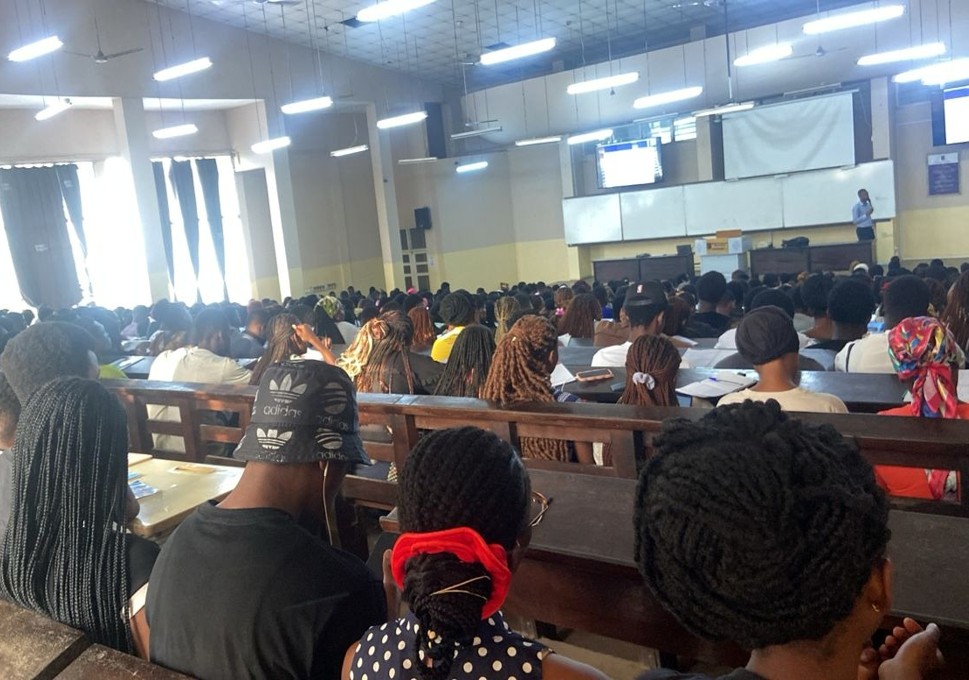
In a study published by Education Sub Sahara Africa (ESSA), the author highlighted a UNESCO statistic showing that, on average, African universities have around 50% more students per lecturer than institutions in other regions. Overcrowded lecture halls are not an exception; they have become the default learning environment for millions of students. At the same time, higher education enrolment in sub-Saharan Africa has grown rapidly, yet the gross enrolment ratio is still only about 9–10%, far below the global average of 38–40%, meaning more expansion is coming.
So, African universities are caught in a double bind: they serve more students per faculty member today, and they will be expected to serve even more tomorrow. Without a new approach to staffing, pedagogy, and assessment, the quality of higher education – and its impact on Africa's development – will continue to be under threat.
The Human Cost for Faculty
Behind that "50% more students" statistic are lecturers who are stretched to breaking point.
- Teaching overload: ESSA notes that in many systems, heavy teaching loads leave little or no time for research or curriculum development. Faculty often add extra part-time roles in private universities just to supplement their income, further eroding time for mentoring and scholarship.
- Administrative and grading burden: As enrolments grow and hiring lags, lecturers spend a disproportionate share of their working week marking assignments and exams, especially in essay- and case-based disciplines. In some African universities, internal studies indicate that lecturers spend roughly 40% of their time on grading rather than teaching, supervision, or research.
- Pipeline pressures: A small pool of postgraduate students and limited doctoral training capacity mean there are not enough emerging academics to replace ageing staff and meet rising demand. This worsens student–staff ratios and perpetuates overload.
The net effect is that many African academics operate in "permanent emergency mode": rushing through content, delaying feedback, and sacrificing research in order to survive each semester.
What Overcrowded Classes Do to Students
When universities are running with 50% more students per lecturer, students feel the impact immediately.
- Limited interaction: In large classes, individual questions, tutorials, and close supervision become rare, especially in resource-constrained environments. Students sit in packed lecture theatres, consume content, and often leave with unanswered questions.
- Slow or superficial feedback: With hundreds of scripts to mark by hand, lecturers struggle to return assignments quickly or offer detailed comments. Feedback often arrives weeks after submission – too late for students to apply it meaningfully in the same course.
- Equity and inclusion challenges: Overcrowded classrooms amplify existing inequalities. Students who are shy, first-generation, or less prepared are the first to be left behind when there is limited time for questions, formative assessments, or office hours.
This is not just an operational issue; it is a quality and justice issue. A massified system without adequate faculty support risks producing graduates who have degrees but not the depth of skills, feedback, and mentoring they need to thrive.
Why Traditional Fixes Are Not Enough
The ESSA report highlights several important policy and institutional reforms: rationalising duplicate programmes, capping admissions in some cases, investing in postgraduate training, and using regional partnerships to build capacity. The Staffing South Africa's Universities Framework (SSAUF) is a strong example of planning for future faculty through programmes like Nurturing Emerging Scholars Program (NESP) and New Generation of Academics Programme (nGAP).
However, most of these measures are slow-burn solutions: they take years to change staff numbers, training capacity, or funding levels. Meanwhile, lecturers are still facing hundreds of scripts to grade each semester, and students still need timely, actionable feedback today.
That is where operational innovation, especially in assessment and feedback, becomes critical.
How Technology Can Help Faculty Breathe Again
One of the highest-leverage interventions is reducing the time faculty spend on repetitive grading tasks while improving the quality and consistency of feedback. Platforms like GradePoint are designed specifically for this reality in African universities.
GradePoint is an AI grading software built to:
- Ingest students' essays, case studies, exams, dissertations, and the lecturer's existing marking scheme or rubric.
- Generate suggested grades plus detailed, rubric-aligned feedback for every student within days (even hours), even for classes of over 100 students.
- Flag potential academic integrity issues, such as copying between students and excessive AI use, so faculty can intervene consistently.
- Provide analytics that help lecturers see grade distributions, common learning gaps, and at-risk students across very large cohorts.
Real-world pilots have shown that this kind of AI grading tool can reduce grading time by 80–90%, cutting per-student review time from 30–45 minutes down to single-digit minutes while still keeping the lecturer fully in control of final marks and comments.
In other words, technology cannot replace the academic judgment at the heart of teaching, but it can take the "first pass" on grading, so lecturers can focus their energy on supervision, course improvement, and research.
What This Means for African Universities
For institutions operating with 50% more students per lecturer, the strategic implications are significant.
- Protecting quality while scaling: Universities can expand enrolment without linearly increasing marking staff, because core assessment workflows become more efficient and auditable.
- Supporting exhausted faculty: When grading ceases to dominate their workload, lecturers regain time for curriculum renewal, research, grant writing, and student mentoring – activities that directly strengthen institutional reputation and rankings.
- Meeting regulatory and internal deadlines: Consistent and timely feedback becomes the norm rather than the exception, helping universities comply with quality assurance expectations and improve student satisfaction.
- Data-driven decisions: With structured analytics on performance and integrity, faculties can redesign courses and support services based on evidence, not anecdotes.
Against the backdrop of the ESSA finding that African universities are already overcrowded and heading into a further wave of demand, these changes are not a "nice to have"; they are becoming a survival strategy.
Take the Next Step
If you are a faculty member or academic leader navigating overcrowded classes, growing assessment backlogs, and constant pressure to do more with less, you are not alone. GradePoint AI is purpose built for African universities. We are ready to help you. Contact us at info@gradepoint.ai.